
Orchestrator
A standalone component that manages the LLM conversation loop with advanced routing, execution control, and observability hooks.
Why a Standalone Orchestrator?
While Pydantic AI provides built-in orchestration, a standalone orchestrator offers:
- Rule-based routing - Route different queries to different models or tools
- Multi-model orchestration - Use different models for different tasks
- Embeddable - Integrate into existing applications and pipelines
- Customizable loop - Inject logic at any point in the execution cycle
- Observable - Full visibility into decisions, timing, and costs
Architecture
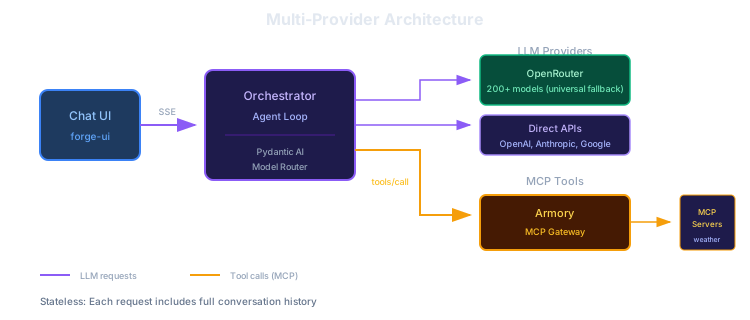
Sub-components
| Component | Responsibility |
|---|---|
| Conversation Manager | Message history, context limits, conversation forking |
| Model Router | Rule-based model selection (fast vs smart, code vs chat) |
| Tool Router | Rule-based routing to MCP servers and backends |
| Execution Engine | Parallel execution, retries, timeouts, result transformation |
| Hooks | Middleware for logging, metrics, and custom logic |
Model Router
Select different models based on task characteristics:
| Routing Type | Example |
|---|---|
| By complexity | Simple queries → fast model, complex → smart model |
| By intent | Code tasks → code-optimized model |
| By cost | Budget constraints → cheaper models |
| By capability | Vision tasks → multimodal models |
Tool Router
Route tool calls to appropriate backends based on patterns:
| Pattern | Destination | Use Case |
|---|---|---|
fs_* | Filesystem server | File operations |
db_* | Database server | Data queries |
* | Armory (default) | Everything else |
Hooks for Observability
Register handlers for various events in the orchestration loop:
| Event | Use Case |
|---|---|
model_request | Log model calls, track usage |
tool_calls | Monitor tool usage, metrics |
complete | Cost tracking, budget management |
error | Error logging, alerting |
Comparison with Pydantic AI Agent
| Feature | Pydantic AI Agent | Standalone Orchestrator |
|---|---|---|
| Setup complexity | Simple | More configuration |
| Routing rules | Limited | Full control |
| Multi-model | One model per agent | Dynamic selection |
| Hooks/middleware | Limited | Extensive |
| Embeddability | Agent owns loop | Component in your system |